
The Creative Economy As Development Infrastructure
News

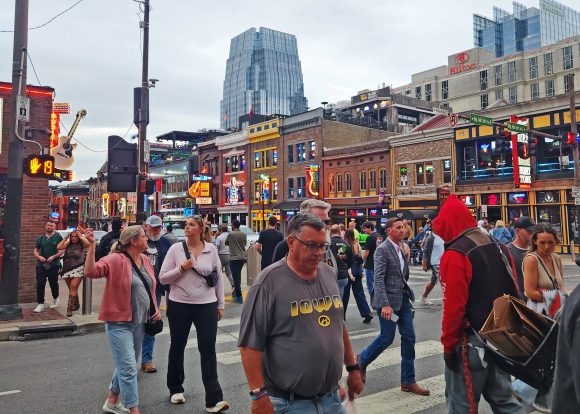
I did not expect one of the clearest lessons on urban development to come from Garth Brooks.
But there he was, at ULI’s Spring Meeting in Nashville, talking about egress, sound bleed, service, safety, storytelling, staff culture, long-term use, and whether a building would still be serving people 20 or 30 years from now.
This was not just a celebrity talking about putting his name on a bar. This was an artist thinking like an artist — and by artist, I mean anyone trained to notice experience, emotion, story, and human behavior, not just someone holding a guitar or paintbrush.
As anyone who’s ever worked with an artist will tell you, artists tend to think about most things, including buildings, differently. Often through a lens that does not line up neatly with the bare-bones practicalities of a project. They think about experience, service, story, sound, emotion, and memory all at once. They ask different questions. Not just: What is the use? What is the return? What is the square footage? But: How does this feel? Who belongs here? What story does this place tell? Will people want to come back? Will the city be better because this exists? What is the long-term impact?
To some people, those questions sound like expensive detours. To long-term thinkers, they are where the value gets created.
Garth and Trisha Yearwood’s Friends in Low Places Bar & Honky-Tonk is, yes, a four-story entertainment venue on Lower Broadway. But the more interesting story is what happened when a performer obsessed with audience experience sat down with real estate professionals who knew how to execute.
The result was not just a bar. It was a hospitality experience, a music venue, a story-driven space, and, somewhat hilariously, a public safety intervention.
One of the smartest moves in the whole project was putting a police station, with a gigantic neon “Police” sign, right next to the bar. Leaders and customers wanted a safer honky-tonk experience. The answer could have been better lighting, more security, more stringent ordinances, or yet another committee to study bad behavior on Broadway.
Instead: hello, the po-po is right there.
That is the kind of idea that sounds obvious only after someone else says it. It is also the kind of outside-the-box thinking cities claim to want more of, but have a hard time figuring out how to pay for.
But that was the point I kept thinking about in Nashville. There, creative people do not just decorate projects after the serious people are done making decisions. In part, that’s because creatives like Garth Brooks are bringing their own capital — and with it, a real say in how the project gets done.
I might get some hate for this, but Indiana needs more patrons like that. Not just people with money. People with money and taste and a point of view and the willingness to use all three in service of the place they live.
Carol Coletta, a Bloomberg Public Innovation Fellow at Johns Hopkins, whose civic resume is basically a master class in public life, gave a short talk on vibrant places that I keep returning to.
She opened with a question: when you think about a vibrant place, what comes to mind?
You know them when you see them. They are pulsing with people. And yes, they generate higher rents and more foot traffic and all the things real estate people care about. But, she argued, the economic case is the least interesting case.
Public space is where people practice being with one another. It is where weak ties form — the casual, low-stakes connections that the data tells us produce intergenerational economic mobility, community resilience, and, most fundamentally, trust.
Then she walked us through the 2025 Edelman Trust Barometer, which is not exactly a beach read. Seven in ten respondents globally now say they are unwilling or hesitant to trust someone with different values, different backgrounds, or different information sources. Only 36% of people in Western democracies believe things will be better for the next generation. Edelman calls the last decade a descent through four stages: fear, polarization, grievance, and insularity.
The one piece of good news in the whole survey is that local trust is still a reservoir of hope. People still trust their neighbors. They still trust the institutions they actually interact with on a Tuesday.
A Tuesday. That was Carol’s word, and it stuck with me. The question isn’t how we throw one big longest-table dinner. The question is what happens on an ordinary Tuesday that rebuilds the muscles of being around people who are not like us?
She told a story about being on a Ferris wheel at a music festival, sitting across from two young women she didn’t know, offering to take their picture if they took hers. They exchanged contact info. She’s still connected to them. That is the journey from hello to weak tie, and it happened because the design of the seating made avoiding each other awkward.
That is what designing for togetherness looks like in practice.
And in this present day, that is not just a nice-to-have. Fifteen years ago, nobody was asking developers to design for climate resilience. Now everyone does. Ten years ago, equity wasn’t on the checklist. Now it is. Connection belongs on the same checklist, and should be stated out loud because this is the part most of our economic development language still misses: public life isn’t extra. Parks, plazas, sidewalks, music venues, coffee shops, galleries, bookstores, cultural districts, activated downtowns — these are not amenities. They are civic infrastructure. They are how a region builds trust, identity, talent retention, and economic momentum.
Nashville is also a warning.
I’ve been in an ongoing conversation with someone who spent more than five years working inside one of Nashville’s most established music institutions before relocating to Indiana. She left, in her words, because the city she fell in love with in 2017 doesn’t feel like that city anymore. The small-town charm got bought out, knocked down, paved over. The local venues that made the place magical are being pushed out because they can’t compete with the larger companies coming in. Live Nation, she told me, is building venues with no story and no unique ability — “just a room with 2500 seats.”
The most striking part of her perspective, though, is that she’s not the only one looking elsewhere. She knows musicians and music industry professionals with deep careers, real expertise, networks, and capital who are actively asking where to go next. The pattern is real: Nashville is shedding the very people who built it.
At Pattern’s Creative Economy Summit last year, we heard a similar warning from people who have lived this in real time: Howie Kaplan, who helped launch New Orleans’ Office of Nighttime Economy, and Chris Cobb, a longtime Nashville venue owner who now leads the Music Venue Alliance Tennessee.
Their message was blunt: culture is dollars, but cities often fail to count it until it is already under threat.
Chris told a story that stuck with me. Nashville had commissioned a major venue study — $300,000 in public money, a couple of years, and 163 pages that, by his account, almost no one seemed to have read. The TN Music Venue Alliance took a different route. Working with Sound Diplomacy, they launched a smaller music census: $15,000, four months, more than 4,000 responses, 100+ community partners, and 10 lead sponsors. The point was not just to gather data. It was to build a community around the data.
The census surfaced parking as one of the clearest problems facing working musicians, especially after parking was privatized and went from free to expensive almost overnight. Within six months, the alliance helped create a privately funded free musicians’ parking program with Metropolis, the parking company everyone loved to hate.
That is the difference between admiring a problem and solving one. Six months. C’mon Speed City!
Howie’s point from New Orleans highlighted the same lesson: stop talking about culture as though it is merely beautiful, nice, or meaningful. Talk dollars. Talk tourism. Talk restaurants. Talk hotels. Talk quality of life. Talk public safety. Talk population growth. Talk about the fact that when people go to shows, they also eat, drink, park, stay overnight, and come back.
In other words: culture does not sit off to the side of the economy. It moves through it.
By the time everyone agrees that a place is valuable, the market may have already made it unaffordable for the people who created that value.
That is why vibes are not enough. A creative economy needs tools. It needs policy. It needs financing. It needs affordable space. It needs preservation strategies that understand cultural meaning, not just architectural beauty. It needs developers who see creatives as partners, not decoration. It needs civic leaders who understand that growth, if left unmanaged, can erase the very identity it profits from. It needs philanthropy that can see beyond the obvious causes and reward innovative thinking, even when it does not look “practical” at first glance.
Here is the number that should be on every economic developer’s desk in this state: Indiana’s creative economy makes up roughly 2% of state GDP, putting us near the bottom of all U.S. states. This was the opening line of the panel I just described, and it landed in the room with a thud.
Indiana does not need to become Nashville. It needs to learn from Nashville — both from what worked and from what is breaking.
The question isn’t whether Indiana has creative assets. We do.
The question is whether creativity, capital, and civic ambition are working in the same direction. I am seeing more and more indicators that this alignment is being sought, but there are still some stumbling blocks we have to clear: creatives being invited in too late, developers being asked to create vibrancy without the right partners or tools, and civic leaders talking about talent, growth, and quality of place without always investing in the creative systems that make those things believable.
That is the work Pattern has been focused on for years: helping Indiana understand, organize, and invest in its creative economy with more intention.
We are proud to be helping lead this conversation, and I would welcome connecting with anyone — developers, civic leaders, funders, creatives, policymakers, educators, or business owners — who sees the opportunity and wants to think more seriously about what is possible here.
Because Indiana does have the ingredients.
Now we need more people willing to help build the recipe.

