
B Swift
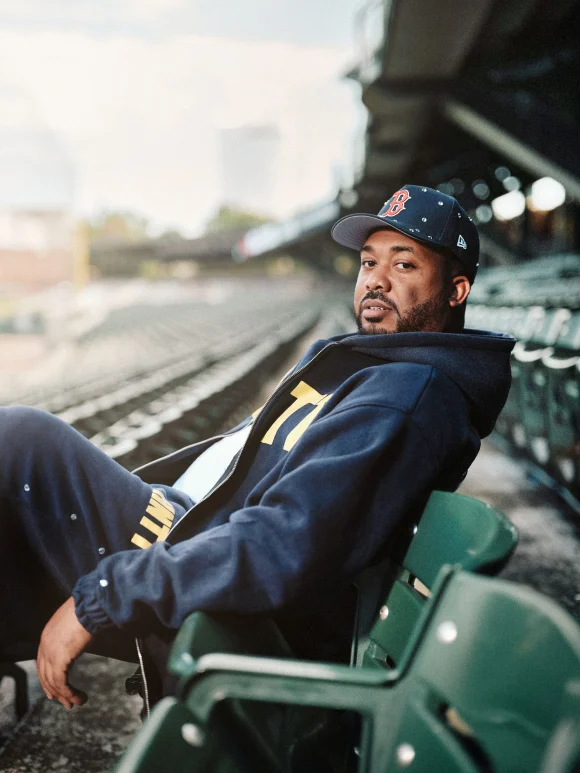
September 6, 2026 - Words by Polina Osherov
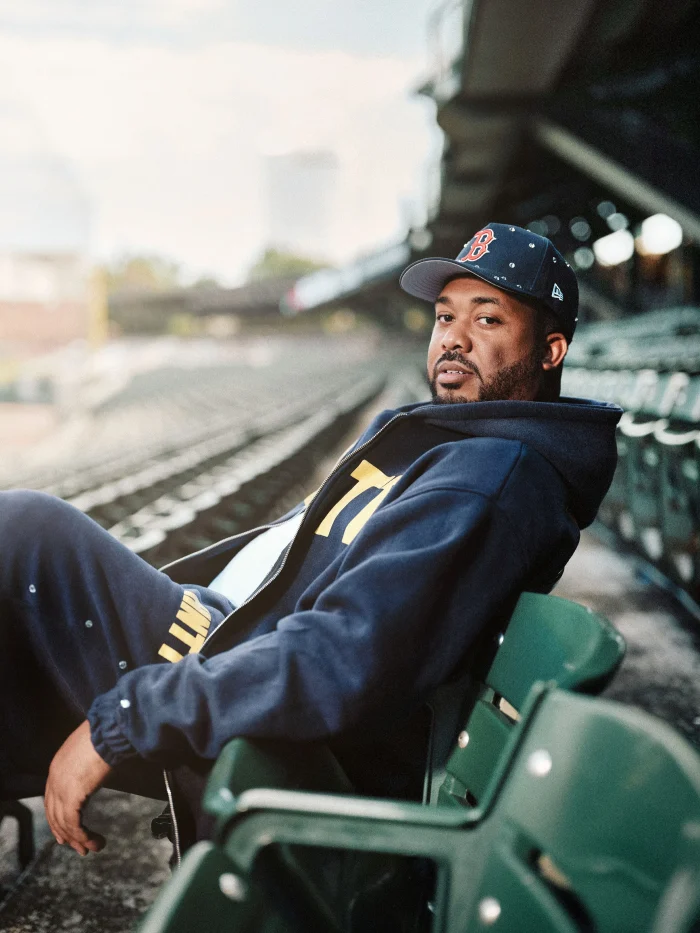
Photography by Jay Goldz; Assisted by Anthony Ramirez; Style by Katie Marple; MUA: Lori Boykin; Cover design by Jacob Chaves
For more than two decades, B Swift has been one of Indianapolis’ most recognizable media personalities. But while the name has stayed the same, the job hasn’t.
What began in radio has expanded into programming, live events, professional sports, podcasting, content creation and mentorship. Today, Swift is both an on-air personality and assistant program director at Hot 100.9, hosts Indiana Pacers and Fever games, and is a familiar presence at concerts and events around the city. Most recently, he hosted the station’s first Creator Summit, bringing local creators together to talk about audience, branding, collaboration—and how to actually make a business out of having people’s attention.
That evolution mirrors what has happened to media itself. The lines between broadcaster, influencer, entertainer and entrepreneur have blurred, and B Swift has spent his career learning how to move between them without losing the thing people connected with in the first place: him.
His longevity has less to do with mastering any single platform than with knowing how to read a room, build relationships, recognize opportunity and keep adapting. Now, after more than 20 years of building his own career, the question is beginning to shift from how B Swift stays relevant to what he does with the influence, access and relationships he’s accumulated—and who gets through the door behind him.
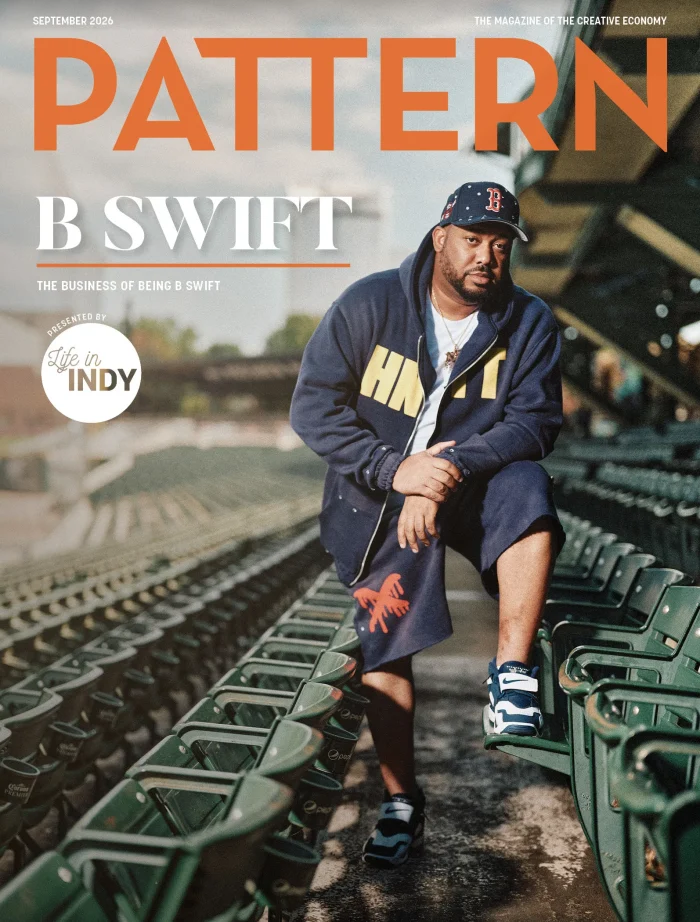
Polina Osherov: You’ve quietly built a 20-plus-year creative career by continually changing what your actual job is. You started as talent, and now you’re in management. You’re a curator, live entertainer, sports host, mentor, interviewer. Where does it stop?
B Swift: It doesn’t. It doesn’t stop.
Nothing is the same anymore, right? The world changes every couple years. One thing my late, great friend Jerry Wade told me—and Tony Lamont too—was that you have to reinvent yourself.
I never want to be the old dinosaur in the room. I can be the dinosaur, but you’re gonna say, “Yo, he’s right on what’s going on.”
That’s something I learned from those two people: make sure I stay relevant. You’ve got to reinvent yourself every couple years just as much as the world reinvents itself.
PO: That’s easier said than done. How do you know what’s changing and where you need to go next?
BS: I’m a Gemini, right? So I’m very observant, for one.
I love to pay attention and be quiet. I tell people I’m very shy, which, if you know the real me, you get it. If you know me from my work, you’d be like, “That’s a lie.”
But in most rooms, I sit back and pay attention before I speak. I observe, I watch, I learn, and then I try to figure out how to walk in the door and make it my own.
PO: You recently hosted Hot 100.9’s first Creator Summit. What was the thinking behind that?
BS: We understand that radio isn’t dying—it just has to keep reinventing itself. And radio hosts aren’t just radio hosts anymore. We’ve become content creators too. We’re creating content, building audiences and selling things, so there’s a lot of overlap & the team that came up with the idea for this event understood that.
It was a collective effort from our digital team with Chase Iseghohi who ran the point with the assist from programming department’s Lawrne Owens & Others helped while being encouraged by upper management, we all wanted to bring local content creators into the building and have those conversations with our syndicated morning show. A lot of people don’t realize that when you’re a content creator, you’re also a business. It’s the same for us in radio. B Swift is a business. Everything you see me do represents that business, and I’ve learned that the hard way. I’ve lost money because of things I’ve said or done on social media.
So part of the goal was to help creators understand the business they’re stepping into, because even though their world might look different from ours, it really isn’t that different.
But we also wanted to learn from them and figure out ways to collaborate. Say you’re a foodie with a following on social media. I can bring you on the radio to talk about a restaurant you visited. Now you’re introducing yourself to my audience, and when you film that conversation and share it on your platforms, I’m getting introduced to your audience too.
That’s where everybody wins. It’s really about collaboration and figuring out how we can use these different platforms together.
PO: And there’s definitely a business model behind being B Swift. Radio, Pacers and Fever, hosted events, branded content, podcasts. Multiple streams of income.
BS: Absolutely. And very legitimately—I’ve got to have multiple streams at this point.
But I love it. I tell people I wouldn’t continue to do it if I didn’t love it.
I still get nervous before every radio show. I still get butterflies before every Pacers game, every Fever game, every concert that I host. My stomach still bubbles.
The moment I don’t have that, I’m done.
I think that’s part of the joy and excitement for me. Everybody has their little ritual. Mine is the butterflies. The moment they’re gone, I’m probably done.
PO: Radio may not have the monopoly on discovery that it once did, but getting played still means something to artists. So if an Indiana artist walked into your office tomorrow with an incredible record, what actually has to happen for you to play it?
BS: That’s tricky. I’m looking for the story of the song. I can love a record, but it still has to fit our listeners and what we’re doing at the station.
I want to know what’s happening around it. What do the streaming numbers look like? What does YouTube look like? What is the artist doing to push the record? Those things don’t determine everything, but they matter. Timing matters. The record itself obviously matters. And sometimes it’s just a feeling that this is something we should give a chance.
4200Kory is a good example. I can look at what he’s doing on social media, look at his streaming numbers, then listen to the record and say, “This is a great record.” That’s something I can take into an office and fight for.
I also use the other DJs as my ears, because sometimes my own ears can get polluted. If we listen to something and collectively say, “Yo, this is a smash. Let’s give this a chance,” then we can make something happen.
But the artist has to do the work too.

PO: Meaning artists really have to advocate for themselves now.
BS: They have to. Anybody can drop music now, so making a good song isn’t enough.
Think about walking into a shoe store. There are a hundred pairs you could buy, but certain ones stand out because you’ve already seen the marketing behind them. Artists have to do the same thing with their music.
That means grassroots marketing, being out in the community, showing up, building relationships and putting the record in front of people. Nobody can push a song better than the person who made it.
You can’t just come to me and say, “I recorded this last night. It sounds good on the radio.” That’s not enough.
PO: You’ve watched music move from radio and CDs to downloads, streaming and TikTok. What did musicians gain in that transition—and what did they lose?
BS: They gained instant fame. Somebody can leave the studio, put a song on TikTok, go viral, and suddenly everybody knows who they are.
But what they lost is development.
They don’t necessarily have to spend years building relationships, getting out, meeting people and learning the business. Making a song can be easy. Going viral can be easy.
The hard part is knowing how to get to the next song, and the one after that. If the first one happened because of luck, timing or whatever pushed it, you may not know how to repeat it.
So for me, that’s the tradeoff: instant fame versus development.
PO: How did you learn what to charge? Was there a point where you realized, damn, I’m leaving too much money on the table?
BS: Friends of mine taught me how to charge.
I always had a price, but sometimes I’d still be like, “Well, what you got?”
I was hosting an event for my friends Worm and Mike-E, and one day they handed me an envelope and said, “This is your new price. Stop being cheap. Don’t charge anybody less than this.”
They told me, “You do a lot for a lot of people, but you’re not getting the full value of yourself.”
That really opened my eyes. From that point on, it got easier to tell people what I cost. And if they say no, they say no.

PO: Why is it so hard for creatives to charge what they’re worth?
BS: Sometimes you don’t know how to price yourself until you get a great opportunity and somebody says, “No, I’m going to pay you more because you deserve more.”
And some of it is belief in yourself. You’re second-guessing: “I don’t know if I’m really that person. I don’t know if I’m really worth that.”
PO: And there’s that weird balance between knowing your value and not wanting to have a huge ego.
BS: Sometimes it takes a while to understand the difference between having an ego and knowing your value.
I never wanted to be arrogant, so for a long time I’d think, “I don’t want to charge too much. Whatever you can give me is fine.”
Then I did something for somebody for cheap and watched them make a bunch of money off it. They didn’t tip me, didn’t give me anything extra, and I remember thinking, “I can’t keep helping people make a lot of money while I make a little.”
That changed something for me. It’s okay to have enough ego to know what you bring to the table—and to charge for it.
Next time, I’m charging you triple, buddy. (Laughs)
PO: What part of your work has gotten more valuable to you over the last ten years?
BS: Honestly, it’s probably not part of the work. It’s time.
I’m a workaholic, but having a daughter changed how I think about it. She’s 10 now, and I’ve learned to pay more attention to how fast everything moves.
I swear last week I was carrying her into this building in a car seat, and now she’s ordering filet mignon off the menu.
So over the last ten years, what’s become more valuable to me is time—and being present for it.
PO: So has Indianapolis changed—or have you?
BS: Both. But I think I have.
There are things I wouldn’t have done ten years ago that I’ll do now. I’m a white-T-shirt guy. I hate dressing up, so there were rooms I just wouldn’t go into because I thought, “That’s not me.”
Now somebody says, “You need to be at this luncheon,” and I’m like, “Alright, I’ll put some clothes on.”
A friend finally told me, “Bro, you’re missing opportunities. You have to do this.”
That was part of growing up—realizing I can walk into those rooms and still be the same person I am in a white tee.

PO: Early in your career, somebody took a chance on you. Now younger talent is looking to you. What responsibility comes with that?
BS: I know what it meant for somebody to give me an opportunity when I had no idea what I was doing, so I try to do the same for other people.
I just got my first intern. On her first day I told her, “Whatever you want to do, my goal is to help you get there. Whether it’s radio or not, I’m going to help you walk into any building in Indianapolis you want to walk into.”
That matters to me because legacy doesn’t continue unless you help somebody else through the door.
I came into this industry with nothing. Now people tell me I’m one of the bigger names in the city. I don’t really see it that way, but I do understand the responsibility that comes with it.
When my daughter walks into a room one day, I want somebody to say, “Whatever you need, I got you, because your dad did the same for us.”
There are people who have been gone for years and their names still ring bells. That’s what I want. I want my name to ring a bell whether I’m here or gone.
PO: So what are you still trying to build? What do you want the next ten years to look like?
BS: That’s something I think about all the time. What’s the next room I build in this house? I don’t know yet.
People tell me, “Run for mayor. Run for city council. Run for president.” I hear all of that, but whatever comes next, I want to stay true to myself and keep making my family proud.
I don’t have some big master plan. I take things as they come. I just know there’s another room to fill—I don’t know what goes in it yet.
Maybe one day I will run for mayor. (Laughs)