

Oreo Jones
Making Chreece Last
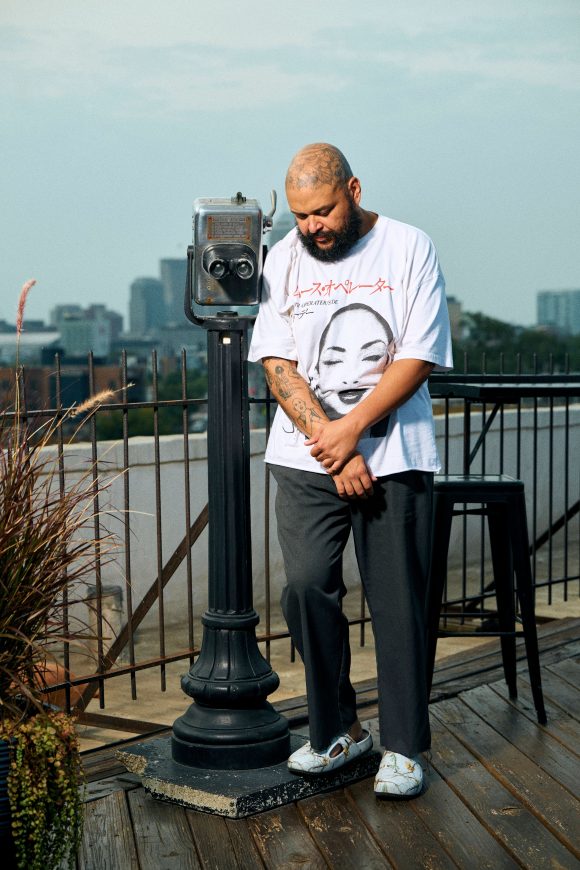
October 4, 2026 - Words by Polina Osherov
Photography by Jay Goldz; Style by Katie Marple; Cover design by Jacob Chaves
For more than a decade, Sean “Oreo Jones” Smith has occupied an unusual position in Indianapolis music. He is a rapper and recording artist, but he is also the founder of Chreece, the hip-hop festival that has helped a generation of Indianapolis artists find an audience, get onstage and, importantly, get paid.
Chreece began in 2015 with considerably less strategy than it has today. Jones describes its early years as something built one step at a time, without much thought about turning it into a company or even paying himself. Over the years, the festival grew, disappeared during the pandemic, returned, and began expanding beyond its annual Fountain Square takeover into artist workshops, cultural programming and music curation for major Indianapolis events.
Chreece now draws more than 5,000 people to Fountain Square each year and has put more than half a million dollars into the hands of artists since it began. Like festivals everywhere, its economic footprint extends beyond ticket sales and artist fees to the venues, restaurants, vendors, designers, production crews and other businesses that surround it.
That evolution has forced Jones to evolve with it.
In 2024, he says, he decided to go all-in on Chreece. For an artist who admits that business used to be “the last discussion” he wanted to have, that meant getting comfortable with money, partnerships, metrics, grants and the unglamorous machinery required to make something sustainable.
The timing feels significant. When we interviewed Jones a decade ago, he talked about musicians hitting a wall when talent alone was no longer enough. They needed to understand touring, booking, budgets and the business surrounding their art.
Ten years later, Jones is confronting a version of the same problem at a much larger scale: Chreece has proved that Indianapolis has the artists, the audience and the appetite. Now he has to figure out how to make sure the thing he and his team created can last.
Polina Osherov: When we interviewed you back in 2016, you talked about artists reaching a point where the music wasn’t the problem anymore. The problem was booking shows, touring, making budgets and understanding the business. Ten years later, do Indianapolis artists have more agency than they did then?
Oreo Jones: Yes and no. I feel like the city has opened up and has a bigger mindset around treating artists seriously and not treating it as a hobby or a last-second add-on.
COVID was a catalyst. You saw artists trying to make a living and treating it like an actual business. Technology has changed dramatically too. Social media changed the game. Content creators weren’t really a thing when we last talked, and monetizing social media and streaming seemed foreign.
Now anybody can be anything. Musicians can create things in their own homes, create short-form content and reach every corner of the world. If you really have the gumption, attitude and drive, you can do whatever you want.
That’s not saying it’s easier to make money. But you can establish yourself much easier and quicker than you could ten years ago.
The beauty and the tragedy is that nobody has the right answer or the right formula. There are ingredients and equations that can help you get to the next step, but everybody is tinkering with different variations of how to navigate this labyrinth of the music industry or any creative industry.
PO: You’ve spent a long time being both the artist and the person creating opportunities for other artists. Has the second part changed how you approach the business of being Oreo Jones?
OJ: I feel like I really went full-time with Chreece in 2024, after Big Car, and started thinking about what it would look like if I really put everything into it.
It’s kind of a mental tug of war. You’re wondering, what am I going to do? Is this even possible? Should we even be here? Especially in a market like Indianapolis that isn’t traditionally an entertainment capital like Nashville, New York or Vegas.
A lot of the time you’re kind of just making things up as you go. We’re not a restaurant. We’re not in tech. We’re not in one of these traditional industries where there’s already a model sitting there for you. We’re a really small team doing a crazy amount.
And putting on that business cap has been different for me because I’m an artist first. When Ron Miner was around, he was really special at that. He had that business mentality, and I learned a lot from him just watching how he approached things. Back then, that was probably the last conversation I wanted to have.
That’s changed dramatically. I kind of had to have those pep talks with myself where it was like, all right, if you really want to take this seriously, then it’s got to be a thing.
And I didn’t want to leave this earth knowing I never gave one big, valiant effort at trying my own thing.

PO: What shifted internally for you?
OJ: Time and intention.
I felt confident that I had relationships around the city and that people were finally taking me seriously. They trust my taste.
Chreece was organic. I never started it thinking, “I’m going to make this the biggest thing ever. I’m going to be a millionaire.” Everything I’ve done since I was a kid, I take one step at a time. We started in a pizza shop and a little DIY gallery space.
I also spent almost a decade at Big Car, and that opened my mind to community and how art can be a mechanism for bringing people together and changing the way a city looks at existing in a place.
It contributes to quality of life. It attracts people to the city. It becomes part of a bigger story.
PO: Chreece has proven the audience exists. The artists exist. Brands and civic partners want to be associated with it. What part hasn’t been solved yet?
OJ: Infrastructure.
It could be gone tomorrow. We’re very fragile in how our model works internally. We’re a very small team. It’s basically Jane, Carly and me, with Vanessa helping out. We do have a legion of volunteers and we contract designers, marketing and other people, but it’s still very bare bones.
We’ve all seen festivals come and go. You can see how fragile that industry is.
It would be nice to have a stronger support system, whether that’s some kind of fund or something else that creates stability. I’m always striving to pay artists more.
And Chreece powers so many different pieces of hip-hop. Hip-hop isn’t just music. There are graphic designers, social media creators, fashion designers, printers, food businesses and all these small businesses we contract with. Then you have the local businesses in Fountain Square that see the influx of people.
It goes beyond hip-hop. You’re energizing a neighborhood and a cultural district.

PO: Are you actually measuring that economic impact now?
OJ: We really started tracking the numbers once we began writing grants a couple of years ago.
That was a big change from when we talked in 2016. Back then, hip-hop was still treated as lowbrow by a lot of institutions. It wasn’t necessarily recognized as an art form worthy of funding. Over time, that shifted. Foundations and other organizations started recognizing hip-hop, Black music and culture as something worth investing in, and suddenly there were opportunities available to us that really hadn’t existed before.
Once we started applying for those grants, we had to get much more serious about documenting what we were doing. How many artists are we paying? How much money are we putting into the creative community? What kind of impact are we having?
When Chreece came back, that became much more intentional. We started organizing the data, tracking the metrics and thinking more seriously about what the organization actually is and what it could become.
That has also led us into bigger conversations about strategic planning and structure. What would it look like if Chreece eventually became a 501(c)(3)? What does the next version of this organization need to be?
PO: Chreece is also becoming more than the festival. You’ve done major sports activations and other year-round work. Is that intentional?
OJ: Yeah. That was another catalyst around 2024. We started leaning into the year-round things.
We did NBA All-Star. Then we did the WWE and Royal Rumble collaboration, the WNBA activation, and this year a company out of Chicago found us and asked us to curate the artists for the slam dunk contest at Hinkle.
It’s cool seeing that 365 mentality. We’ve been fortunate to start being looked at as culture and as people who can curate that culture.

PO: Indianapolis has spent years talking about developing its music economy. What do you think is still missing for artists themselves?
OJ: It’s complicated because the music community is so broad. You have the person playing an open mic in Fishers, the rapper playing the 808, the DJ at Tin Roof, the DIY kid playing Healer, the singer-songwriter at a farmers market. They’re all part of the music scene, but they’re having very different experiences.
If you’re serious about developing the music economy, you need people who are actually connected to those communities. People who know the venues, know the artists and are willing to reach across genres and spend the time understanding what’s really happening.
I think sometimes people want to find the answer too quickly. They want to identify the music district or figure out which neighborhood is bubbling.
But the authentic stuff doesn’t happen overnight. Those scenes are usually built by people doing the work when nobody is paying attention, putting on shows, helping each other and creating things with almost no money.
That takes time. You have to pay attention to what’s already happening and support it as it grows.
PO: What would have to exist here for a talented 22-year-old rapper to reasonably say, “I can build my career in Indianapolis,” rather than just, “I can get my start here”?
OJ: Money, space and resources.
It would be sick if there were a fund specifically for emerging artists that could provide a basic salary. Indianapolis artists are working-class artists. You’re working on your art, but you’re also working in the service industry or at some other job you don’t really want to be at to pay your bills.
You get the time to work on your art only after you clock out.
Imagine having financial support where you don’t have to worry about that, and then alongside it there’s programming where you learn how to turn your art into revenue. You learn from industry professionals how to book a tour, do your taxes and handle the business side of things.
If I had that when I was a 22-year-old rapper, that would have been huge. I had to figure almost everything out myself.

PO: You’ve spent years convincing Indianapolis to take hip-hop seriously. Is that still the fight, or has the fight changed?
OJ: People are taking us seriously, slowly but surely. I think the fight now is getting people to understand that this is part of the culture of Indianapolis and it’s worth protecting.
You look at Indiana Avenue and what existed there with jazz, blues, Black musicians and Black-owned businesses. So much of that was eventually lost or forgotten. I don’t want us to repeat that history.
Hip-hop and Black music today look and sound different, but they’re still part of the story of this city. I want people to recognize that while it’s happening, not years later when we’re looking back and talking about what used to be here.
At the same time, some of those old stereotypes are still there. Insurance is a good example. Sometimes as soon as you say hip-hop is part of an event, a company either won’t insure you or the price jumps by thousands of dollars.
That stuff is frustrating. But after all these years, it is cool to see more people recognizing the positive side of what we’re doing and the joy that comes from it.
PO: And now you’re heading to Dublin with the Indy Chamber’s Leadership Exchange. How are you thinking about being in that room?
OJ: It’s interesting. I’m still this artist trying to figure out what I’m doing, and I’m really fortunate to be going to something like this through the Chamber.
Getting into those spaces is important. Representation is important.
I want to do a good job representing artists and figuring out how we can be taken even more seriously.
I’m excited to see how it goes and what Dublin has to teach us.
