The Creative Economy As Development Infrastructure
When people arrive in a city, the first story they encounter isn’t a brochure or a pitch deck. It’s the built environment. The streets, the buildings, the spaces in between. That’s where a city’s values and ambition show up first.
That’s one of the reasons I love the Indianapolis International Airport. Even if you don’t think of yourself as an art person, you land here and immediately get the sense that this is a city that cares about design, culture, and experience. It’s thoughtful. It’s intentional. And it quietly reshapes how people perceive Indianapolis before they’ve even left the terminal.
The airport is a unique case I grant you. Most development is far more pedestrian. It’s mixed-use. It’s retail. It’s adaptive reuse. It’s infill. And it unfolds under real constraints. Tight budgets. Tight timelines. Costs invariably go up. And when that happens, the things that feel nonessential are often the first to go. Artistic elements. Creative touches. Anything that doesn’t feel strictly functional.
I get that. But.
There’s a trend I want to point out that we should be paying attention to. In cities that are pulling ahead, the creative economy is no longer being treated as an amenity. It’s being treated as infrastructure. Something that’s considered early, alongside use, flow, and long-term value. Not bolted on at the end if there’s money left over. When that happens, the places we build don’t just function. They signal something. They attract people. And ultimately create that sense of vibrancy that all cities want to be known for.
At Pattern, we work across the state at the intersection of creatives, developers, and civic leaders. That gives us a front-row seat to what’s actually happening on the ground. And one thing we’re hearing more often is this: developers and towns want to engage creativity, but they’re not always sure how to do it well.
These questions come up a lot. How do we find artists? How do we connect to creative businesses? How do we do this in a way that feels authentic and not performative?
In central Indiana, we actually have strong examples of this working. Organizations like the Indy Arts Council, Noblesville Creates, Westfield Creative Collective, and GangGang are doing the work of organizing creative communities, supporting artists and creative entrepreneurs, and partnering with cities and developers in meaningful ways. That said, there’s no question that the broader infrastructure that makes it easy for creatives and developers to get in the same room is not yet fully cooked.
Where things tend to break down isn’t intent. It’s timing.
Creativity is often introduced late, after major decisions and budgets are already locked in. At that point, it’s forced to compete with plumbing and parking ratios. When creative economy thinking comes in earlier, it doesn’t just change what a place looks like. It changes how it functions, who it attracts, and how it performs over time.
You can see this clearly in markets that are a step ahead. Denver’s River North Arts District (RiNo) is one example. What’s notable there isn’t just that artists were present early, but that as the district began to attract development pressure, there was a recognition that those artists were core to the district’s identity. The RiNo BID was established to champion local artists, creatives, and small businesses, and to advocate for their place in the district as it evolved.
That doesn’t mean displacement didn’t happen. It did. But there was an intentional effort to slow it, manage it, and acknowledge that losing the creative community would undermine the very value that made the district attractive in the first place. That kind of thinking doesn’t happen by accident. It requires policy, partnership, and a willingness to treat creativity as something worth stewarding, not just consuming.
That lesson matters here, especially as we think about new development. Because many projects in Indiana aren’t evolving out of existing creative districts. They’re being built in places where creativity doesn’t yet have a foothold. If you’re developing a mixed-use project in a cornfield, the lift is heavier. You don’t inherit creativity. You have to make space for it intentionally.
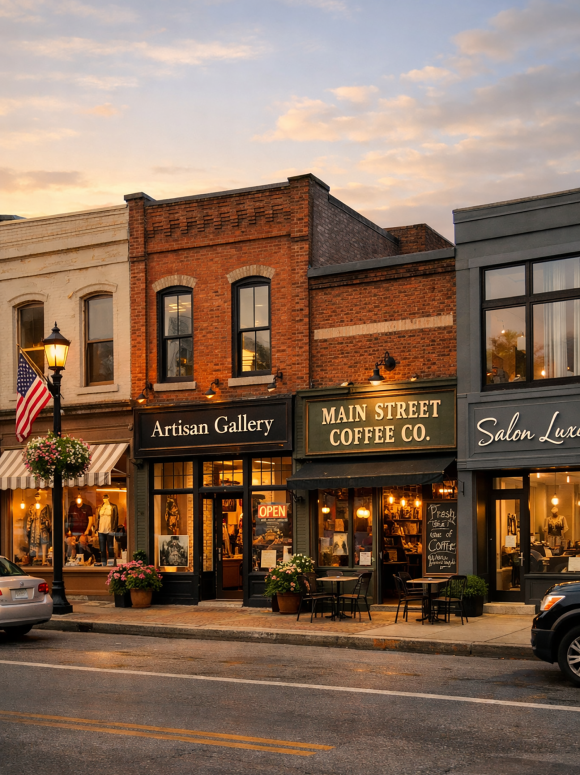
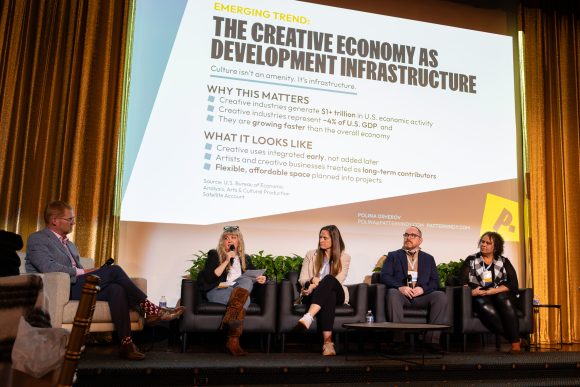
And often, all creativity really needs is space. Affordable, flexible space to be precise. Places where cool, weird things can happen. Pop-ups. Small performances. Artist gatherings. Creative startups. Third spaces like independent coffee shops, galleries, or repurposed buildings that invite experimentation are also key. When that space is planned for early, creativity has a chance to take root. When it isn’t, it rarely shows up later.
So whether you’re stewarding an existing district or building something entirely new, the responsibility is the same. Be thoughtful about how creativity lives in the places you build. Because it’s not just what makes places interesting. It’s what makes them durable over time.
Through the READI 2.0–supported arts and culture studies across Indiana, we see a consistent pattern. Creative activity clusters where people want to live, work, and invest. That has real implications for absorption, tenant mix, and long-term property values.
And this isn’t a niche conversation. Nationally, arts and cultural activity represents over a trillion dollars of economic value, more than four percent of U.S. GDP*, and it’s growing faster than the economy overall. Globally, creative industries account for an even larger share. This is a real economic sector, not a side story.
So my encouragement is simple. As you think about your next project, as you advise clients, as you shape policy and incentives, bring someone who understands the creative economy into the conversation earlier. Not to add cost, but to help you make smarter, more durable decisions about place.
That’s how we move from projects to districts, and from buildings to cities people actually want to be part of.
*Source: U.S. Bureau of Economic Analysis, Arts & Cultural Production Satellite Account